
The certainty that wine is made from the place where it is born and that non-interventive oenology, combined with respect for the terroir of each small plot, can, with the right oenology, make all the difference.
This philosophy cuts across both viticulture and oenology because, in the winery too, all the vineyards, no matter how small, are worked on separately in order to understand each piece of land or even each piece of the Alentejo terroir. For us, making a red or white wine is the culmination of the work between vineyard and winery.
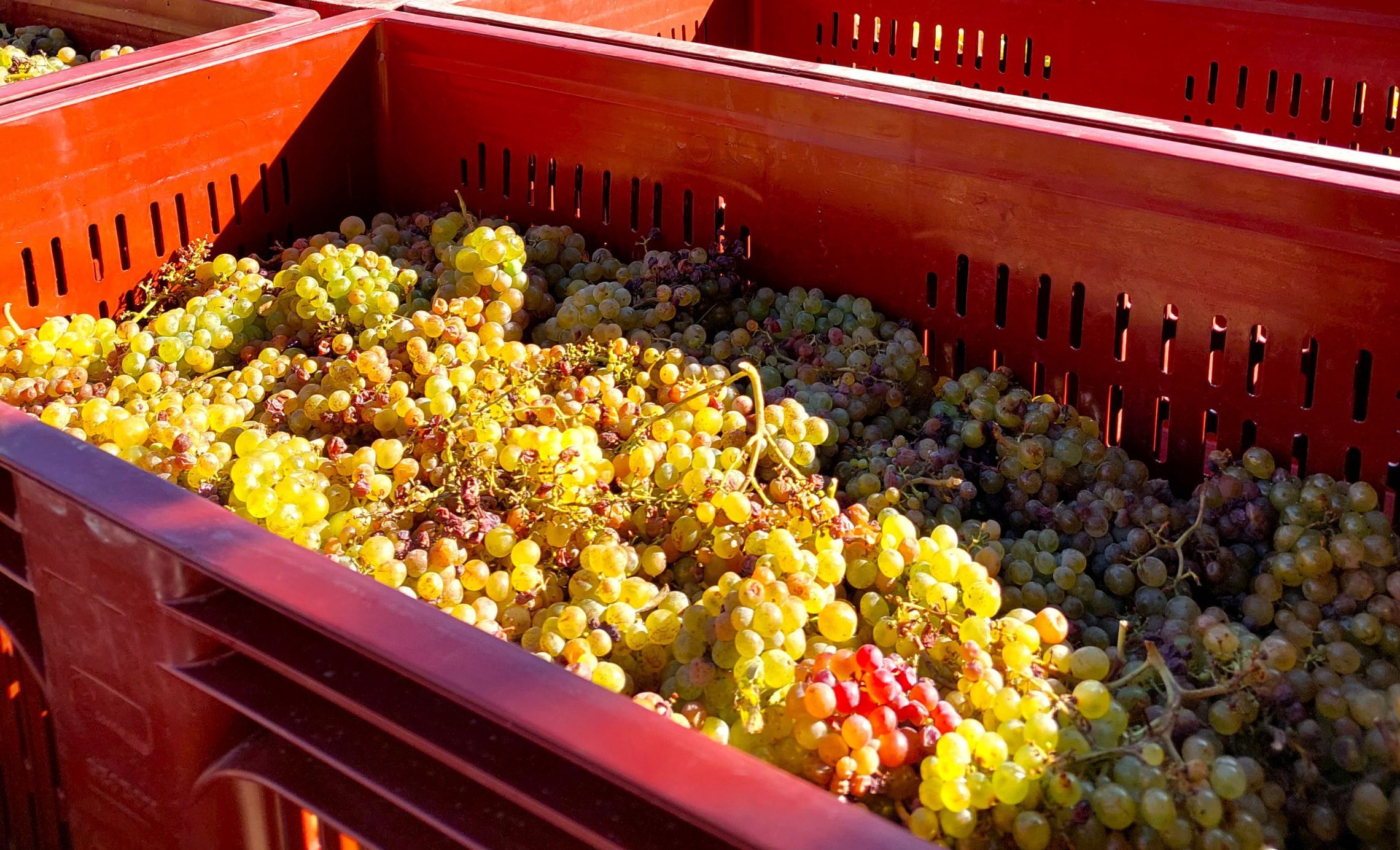
The production of white wine can be varied, we have the whites from vats based on fruit and purity, we have the whites from Talha that breathe the Alentejo of yesteryear and also the whites from Madeira that show our version of whites of complexity and texture. So let's take a closer look at the winemaking process of our white wines!
The process of making white wine involves several stages: pressing the grapes, settling the must and alcoholic fermentation. Each of these stages in the white wine production process can be altered depending on the white wine in question, and in some cases malolactic fermentation, which takes place after alcoholic fermentation, can also be carried out. So, for each wine, the winemaking process changes depending on the origin of the grape varieties used, the grape varieties themselves and the idea that the winemaker constructs for the wine.
Wines in the Alentejo have always been made and stored in carvings. A talha, or amphora, is a bulging container made of fired clay, which enhances the natural micro-oxygenation of the wine.
During the fermentation of talha wines, there is spontaneous fermentation along with the skins, grape seeds and sometimes some stalks. As the grape skins rise to the surface of the carving, a wooden squeegee places them back on the bottom in order to increase the extraction of color and phenolic compounds.

 />
Talha wines are generally very aromatic and simple in structure, reflecting the winemaking process.
Our Branco de Talha is based on the old methodology, where we seek complexity and regional identity, while using the crushing/pressing techniques we advocate.
Wines are the result of yeasts transforming the sugar in grape juice into alcohol.
These yeasts have been isolated and selected, producing better and better wines with cleaner, more defined aromas, which gives winemakers more control.
Added to this, temperature control has allowed us to greatly improve the quality of our whites in recent years.
 />
An example of this is our Branco de Indígenas. This wine is the result of spontaneous fermentation using indigenous yeasts, i.e. from the place, the air, the surrounding environment, in 225L barrels with no temperature control. The result is a textured wine, with some clean fruit, mixed with a good rough component, which gives it the soul of things you can't control.
During barrel aging, the wine undergoes changes due to the extraction of volatile and non-volatile compounds from the wood and the chemical reactions that occur with the passage of oxygen through the pores of the wood, which allows the wine to acquire complex tertiary aromas, color stabilization and spontaneous clarification.
Aging in stainless steel vats, on the other hand, preserves the unique properties of the grape varieties, giving the wine a singularity and truth, making it cleaner with the decanting of sediments over time.


 />
Our Fitapreta Branco is the result of spontaneous fermentation, 85% in vertical vats, 5% in small horizontal vats and 10% in neutral barrels.
An effort to resurrect the old formula for Alentejo whites, using grape varieties typical of the region. Some grape varieties such as Tamarês (syn. Trincadeira das Pratas) and Alicante Branco (syn. Boal de Alicante) are reduced to a few hectares.
Related articles