
 />
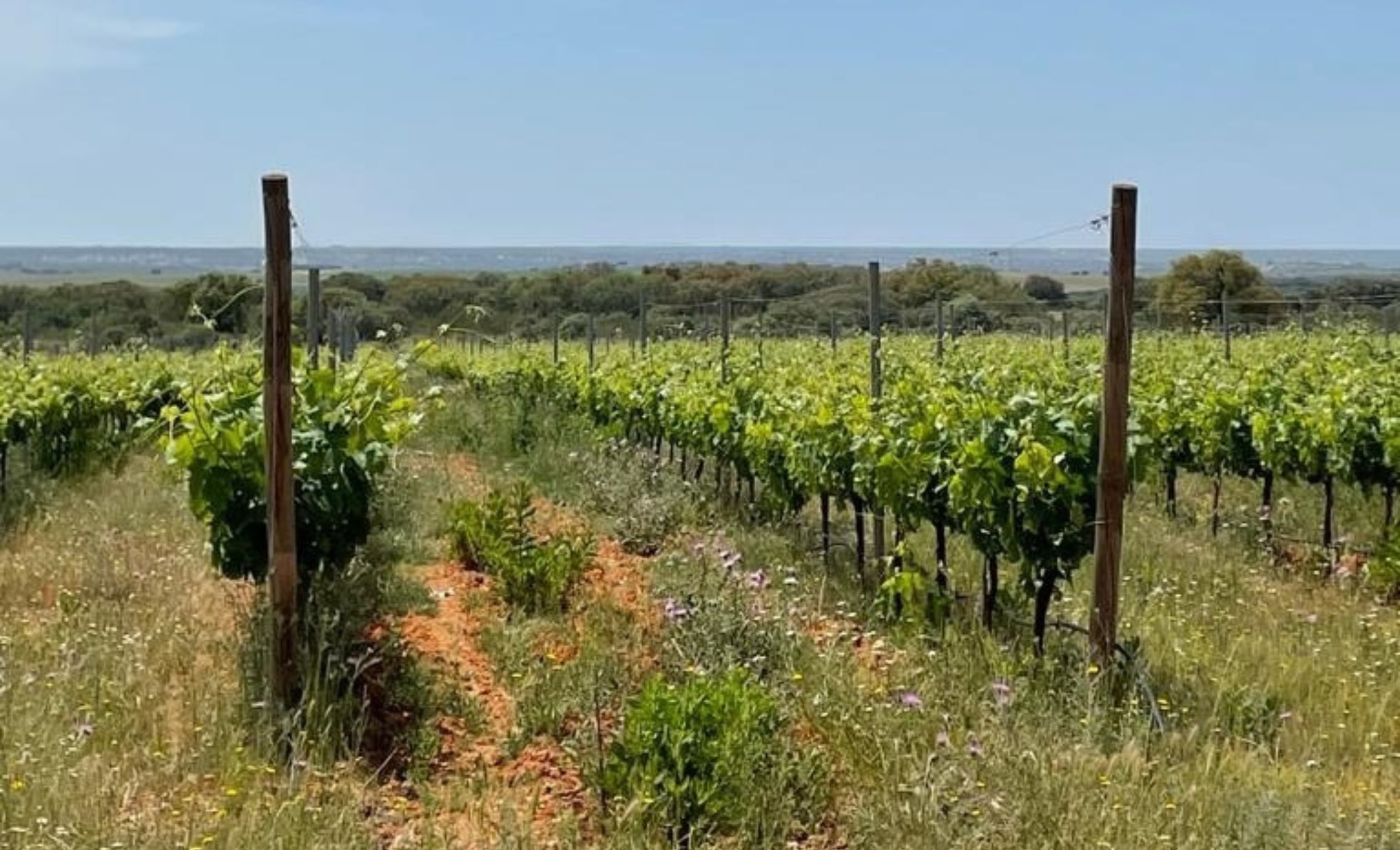
At the foot of the Serra d'Ossa is this Chão dos Eremitas, where the Hermits of the Order of São Paulo, Os Paulistas, chose to plant their vineyards. Two streams bring rainwater down from the Serra and keep the ground cool in the torrid Alentejo heat. These vineyards were of such importance that a Papal Bull of 1397 exempted the Paulistas from taxes on the vineyards and reinforced their importance.
Grape varieties: Alicante Branco, Roupeiro, Tamarez and Rabo de Ovelha.
Viticulture: Grapes in certified organic production, without the use of herbicides. Our vineyards are also all certified under the Alentejo sustainability program.
Winemaking: Manual harvest at night, direct press, no sulphites until the end of fermentation, no decanting, spontaneous alcoholic and malolactic fermentation in old barrels. Aged for 14 months.
A total of 1,989 numbered bottles were produced.
Year the vineyard was planted: 1969
Altitude: 256-267m
Location: southern foothills of the Serra d'Ossa
History: This place is special, you can feel it! Two streams carry the rainwater from the Serra, never lowering the water table below 5 meters. This is where vineyards used to be planted, there is evidence of uninterrupted wine production since the 14th century, but archaeology goes further, as the discovery of the only Phoenician wine amphora in the interior of the country, dating from the 8th century BC, links this place to wine some 900 years before the arrival of the Romans, in what is 3,000 years of history linked to wine.
 />
Alicante Branco was and is also known as Boal de Alicante or Boal Cachudo and was an important grape variety in the Alentejo for many years. Gyrão, 1822, 50 years before the phylloxera, mentions several "Boiais" but gives special prominence to the Boal Cachudo (synonymous with this variety).
It produces straw-yellow wines with a white-fleshed fruit aroma, good structure and depth.
 />
Considered to be Portugal's oldest white grape variety, it is called Códega in the Douro, Síria in the Dão and Bairrada, Roupeiro in the Alentejo and Crato in the Algarve region.
Roupeiro is the most widely planted white grape variety in the Alentejo and is the basis of the region's white wines.
 />
Tamarez now has the official name of Trincadeira-das-Pratas.
Tamarez was one of the most important white grape varieties of the old Alentejo vineyards.
The daughter of a cross between the white Mourisco (Heben) and the black Alfrocheiro grape varieties.
 />
Rabo de Ovelha is a grape variety from the Alentejo region that has a round bunch with oval green berries.
It is a medium-ripening variety that is often used in Alentejo white wine blends.
Rabo de Ovelha has good acidity, but when harvested late, it produces wines with a high degree of acidity.
Related articles