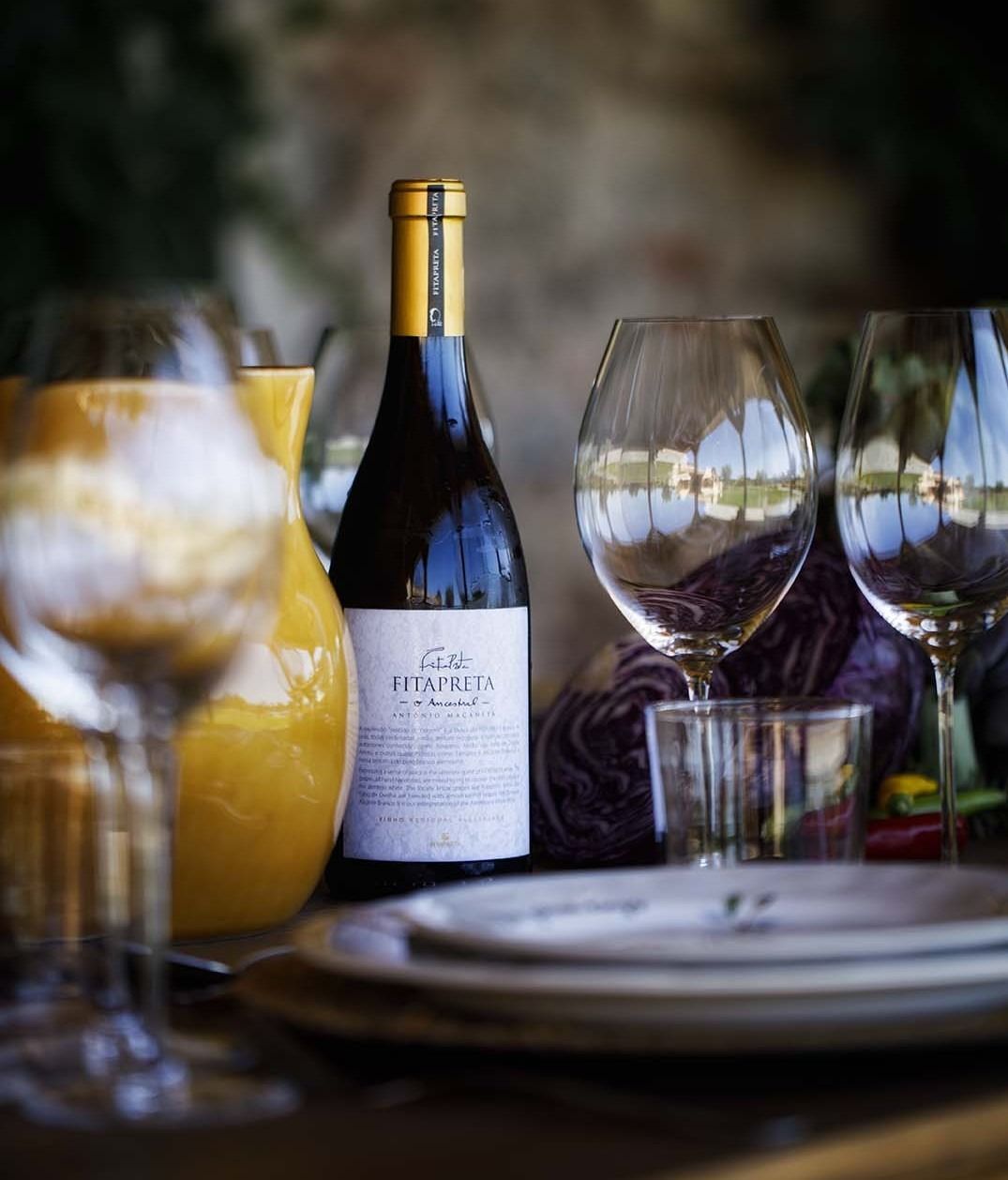
The expression "sense of origin" is what Fitapreta Branco strives for. The grapes, all harvested by hand, try to recover the formula with well-known indigenous varieties such as Roupeiro, Antão Vaz, Rabo de Ovelha, Arinto, and others that are almost extinct such as Tamarez and Alicante Branco. It's our attempt at pure Alentejo white.
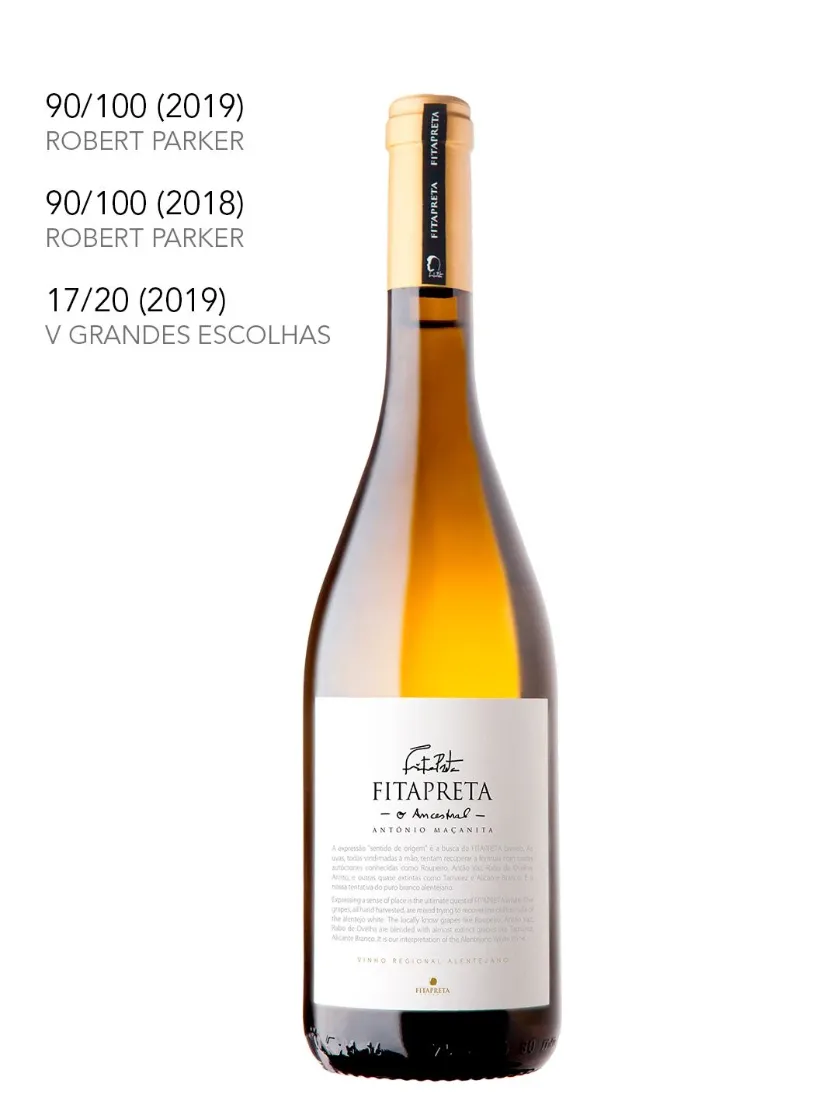 />
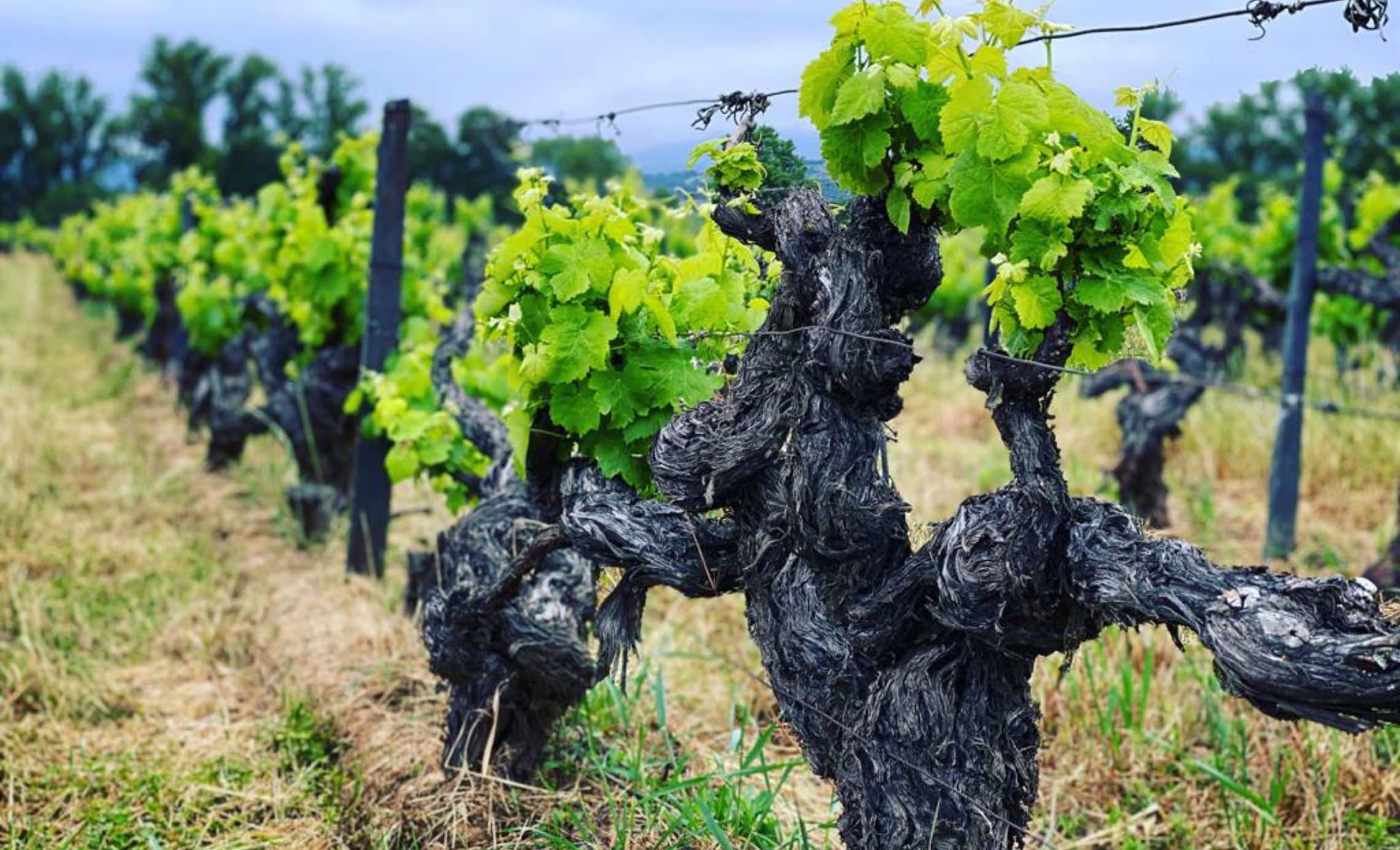
Fitapreta Branco is a wine of origin, an effort to resurrect the old formula of Alentejo whites, using grape varieties typical of the region, from old vines with an average age of over 50 years, in a field blend. Some varieties such as Tamarez (syn. Trincadeira das Pratas) and Alicante Branco (syn. Boal de Alicante) are reduced to a few hectares. Produced with minimal intervention, it expresses the pure aromas and flavors of the Alentejo.
Vinification
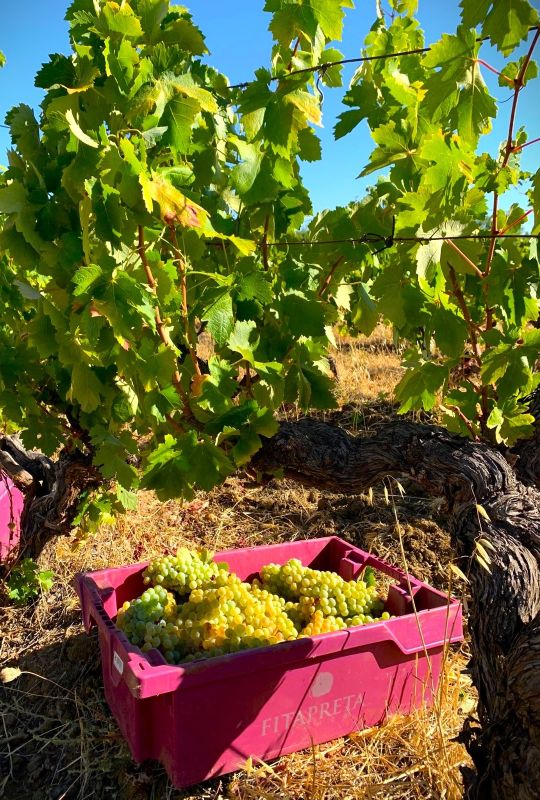
The grapes are picked from 11pm to arrive fresh at the winery by 7am. The whole bunch is pressed. Suspended solids settle naturally (6-12 hours). Fermentation 85% in vertical vats, 5% in small horizontal vats and 10% in neutral barrels. Spontaneous fermentation. After fermentation, it remained on the lees until the end of February, when it was bottled.
Tasting notes
Citrus yellow in color, with an intense citrus aroma and mineral notes refreshing the whole. Attacks with good volume and is rich on the back end. It finishes with impressive freshness in harmony with good fruit. The finish is quite persistent.
Tamarez, too, now has the official name of Trincadeira-das-Pratas. Tamarez was one of the most important white grape varieties of the old Alentejo vineyards.
The daughter of a cross between the white Mourisco (Heben) and black Alfrocheiro grape varieties.
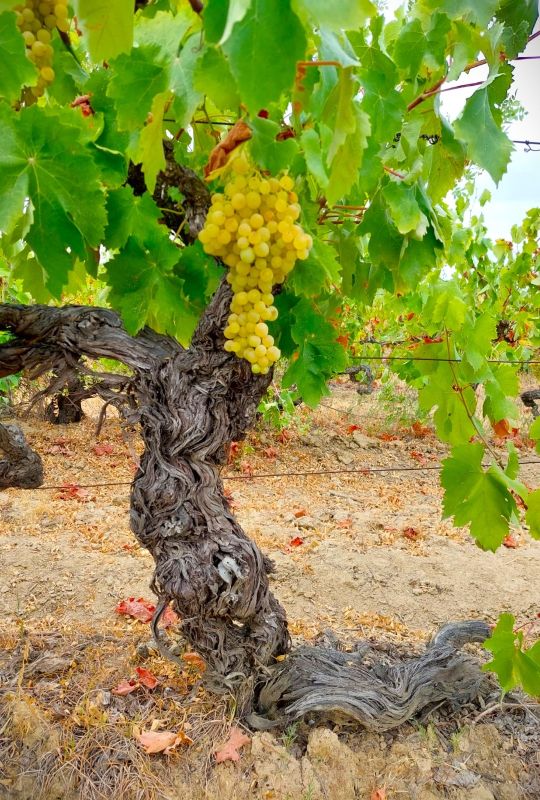
Alicante Branco was and is also known as Boal de Alicante or Boal Cachudo and was an important grape variety in the Alentejo for many years.
Gyrão, 1822, 50 years before the phylloxera, mentions several "Boiais" but gives special prominence to Boal Cachudo (synonymous with this variety).
Related articles