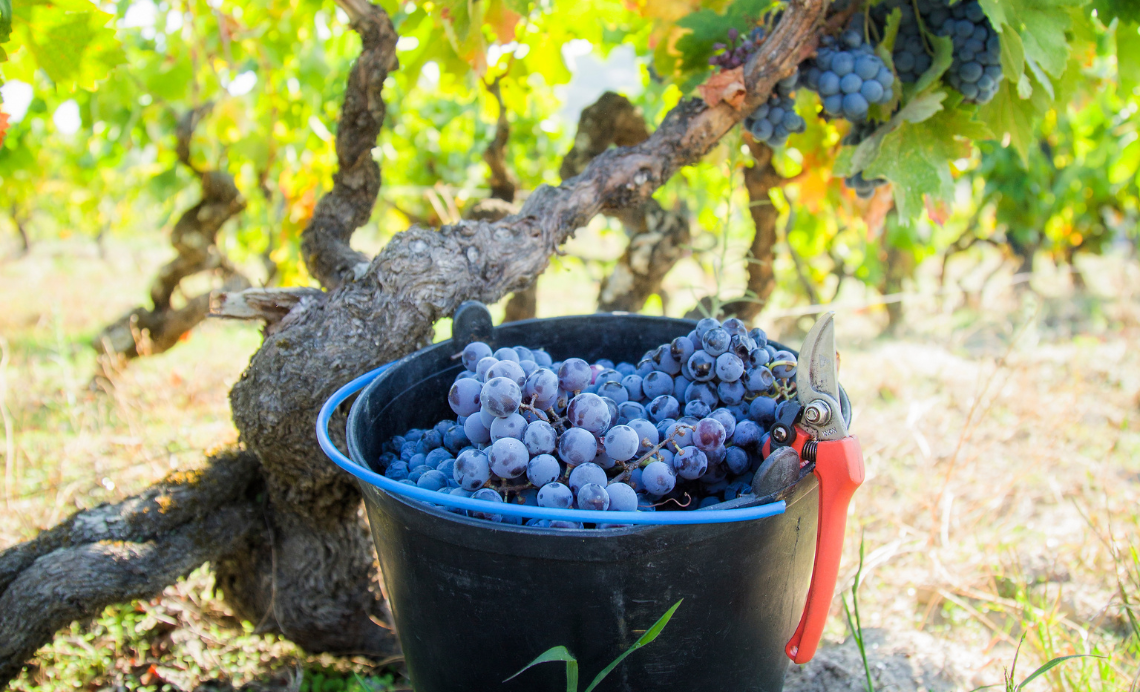

The efforts to finish the harvest continue at the Maçanita winery and, between days of great heat and days of torrential rain, the team remains ready for the challenges that the hustle and bustle of the season brings!
Grapes from old vineyards predominate in the baskets coming into the winery and there's no shortage of time to select them. Until the grapes arrive, the team doesn't stop (not least because Joana won't let them!)! There are maturation checks to be carried out, cleaning in the cellar, pressing and reassembling, so that the cycle can begin again as soon as more grapes arrive.
The white wines: Maçanita branco, Gouveio da Joaninha and Folgasão dos dois, are Joana Maçanita's main focus at the start of each harvest.
The oenology practiced always tries to respect the fruit and the purity of the grapes. As soon as the white grapes arrive at the winery, they are pressed into whole bunches without destemming, then gently pressed in a pneumatic press, without the addition of sulphur dioxide. The wine suffers a slight oxidation which eventually disappears after 24 hours in a stainless steel cold decanting tank. Fermentation temperatures are low, around 12 to 14ºC, in an effort to maintain all the freshness and minerality of the high altitude Baixo Corgo vineyards where these grapes come from.
In the whites from old vines, there are many different grape varieties: we have around 17 different white grape varieties in each of our wines from old vines, such as As Olgas Branco, Os Canivéis Branco and Fontainhas. Varieties with very different ripening times, such as Viosinho which ripens much earlier than Arinto, yet they are all blended together in the same vineyard.
These factors are weighed up and the grapes from the old vineyards are pressed in whole bunches into neutral barrels (barrels used for more than 7 passages of wine) and fermented at a free temperature, which generally reaches between 21º and 24ºC. After fermentation, some of the barrels also complete malolactic fermentation (fermentation that takes place after alcoholic fermentation, where malic acid is converted into lactic acid, which is less strong and makes the wines softer).

Related articles