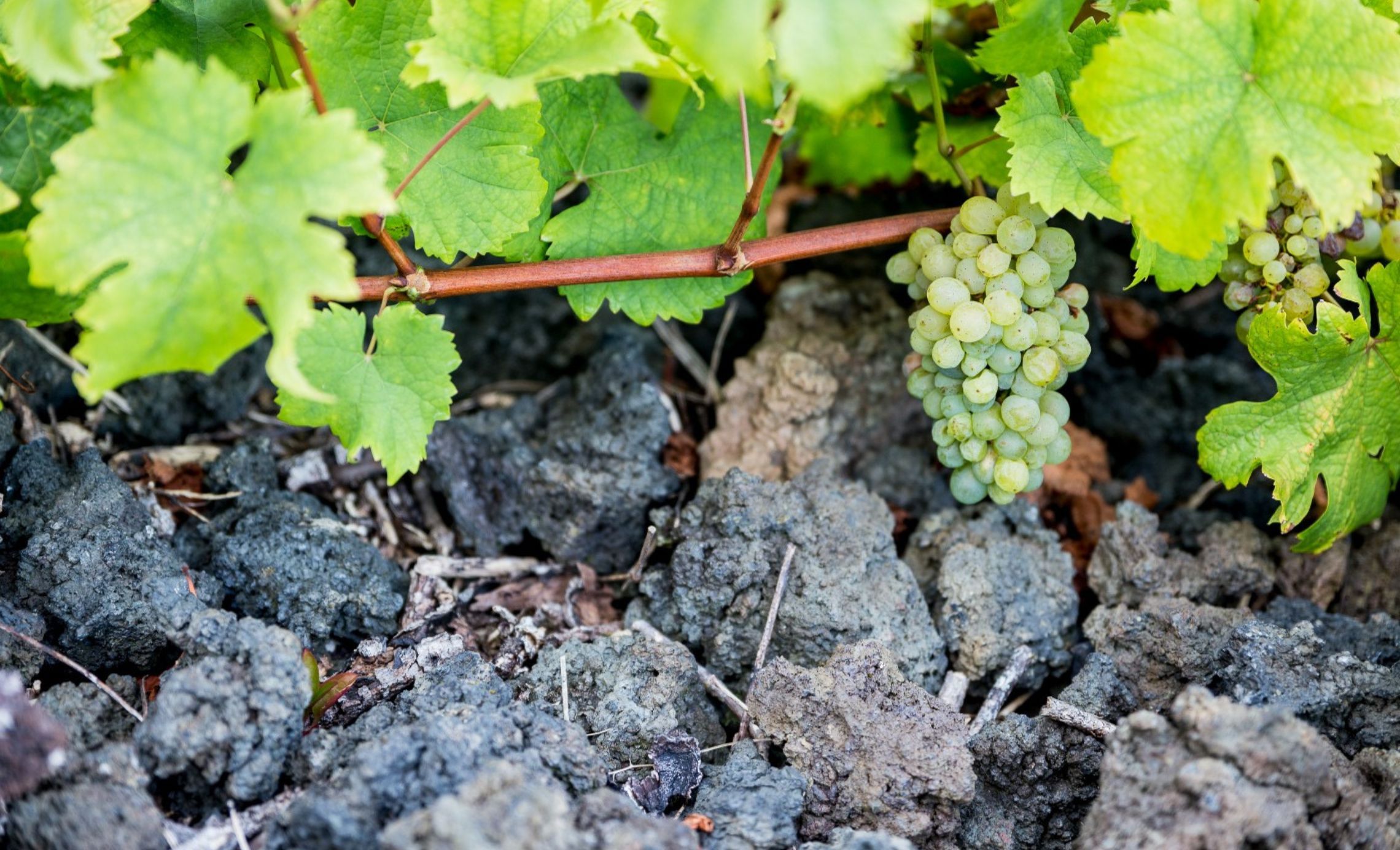

The "vinho da corda" was one of the ways in which "liqueurs" were prepared before the arrival of brandy in the mid-17th century. The vines, once planted closer to the sea, were able to reach other degrees of ripeness, allowing for a naturally concentrated must.
The technique consisted of first separating the flor wine, which was clearer and fresher, and then, from the last pressing, removing the "vinho da corda" with a more golden and loaded appearance, so fashionable at the time.

 />
Grape varieties
Listrão (aka Listan Blanco, Palomino Fino) and Caracol.
Viticulture
Vineyards between 40 and 80 years old, with traditional creeping vineyards, close to the ground and protected from strong winds by reeds or crochet walls. Soils: Limestone soils with a sandy loam texture and pH>8.5.
Vinification
The grapes were harvested by hand on the island of Porto Santo. Tight selection in the vineyard, with some vines being harvested more than once, picking the ripest first and the rest in a second harvest. Direct pressing of the whole bunch into settling tanks, with three fractions being separated, without any use of SO2 until the end of fermentation, in order to allow pre-oxidation of the must and fuller spontaneous fermentation. From the last fraction of the press, the "Corda must" was transferred to Pipo velho for Porto Santo wine. Aged for 12 months in Pipo velho.
Production: 1,340 bottles.
Related articles