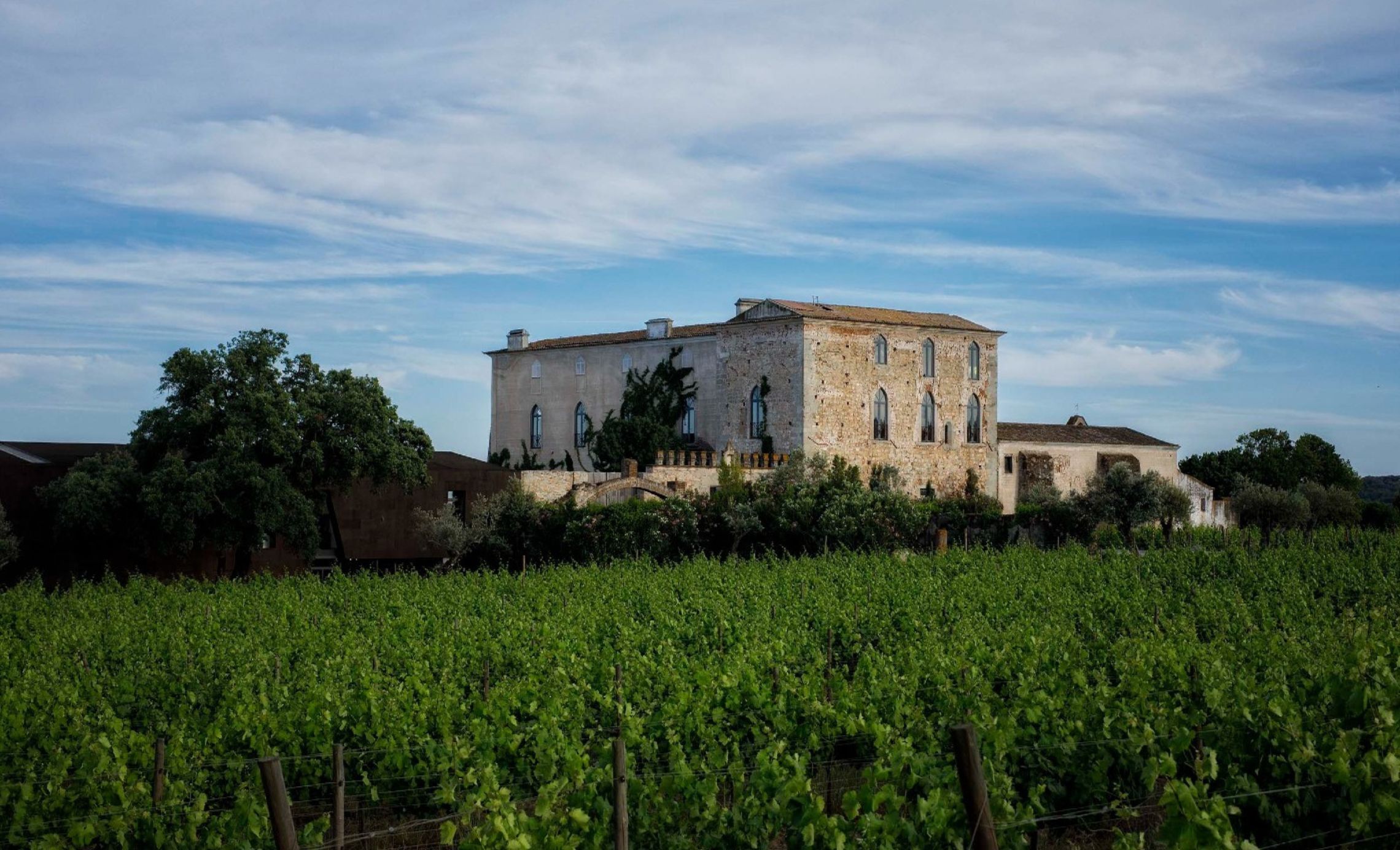

In Carlão, Alijó, a less prestigious demarcated area of Douro, at least in terms of Port wine production, the plots owned by farmers have been classified as Letter E, F, G, and subsequent categories. These small and unique vineyards, most of them with over 50 years of mixed red and white grape varieties, still adhere to the traditional training systems of the ancient Douro.
These vineyards hold a genuine, original, and distinctive story that must not be abandoned or marginalized. Hence, every effort will be made to preserve this heritage.
The cultivation of grapes and wine production in the parish of Carlão has been a part of its community's daily life since at least the time of Roman occupation, as evidenced by the Roman settlement found in the region, within the archaeological site of Carlão.
The vineyards in this region are considered not only cultural but also genetic heritage, consisting of blends of red, white, or rosé grape varieties, some of which are nearly extinct. These vineyards are densely planted, with some so tightly spaced that mechanization is unfeasible. They are cultivated using ancestral methods, such as the bush vine training system. The resulting wine profile harks back to a time of concentrated, fresh, delicate wines with a more open color palette – special wines that are currently challenging to come by.
However, in more recent history, with the demarcation of the region and greater investment in Port wine production, these vineyards' lower classification for producing fortified wines, combined with their aging, led the region into socio-economic decline.
The substantial demand for manual labor these vineyards necessitate, along with the farmers' circumstances and low grape prices, resulted in them selling their vineyard production licenses to merchants who would then plant them in areas better suited for Port wine. This predicament has plagued Carlão for the past two decades, causing the destruction of nearly a hundred hectares of old vineyard areas.

The primary goal of our Douro project in the Carlão region is to prevent further vineyards from being uprooted and relocated. Thus, what began with a 0.6-hectare vineyard has now expanded to over 4 hectares, divided into 11 plots.
None of the purchased vineyards undergo complete renovation. The vine restoration protocol, employed in cases where the vineyards are severely degraded, involves the original planting process. All replanting is done with cuttings that will later be randomly grafted with the varieties existing in each vineyard, thereby maintaining authenticity from planting to management.
 />
In the Vale da Barca plot, where vineyards aged between 140 years at an altitude of 530 meters on granitic soil, a wine is born that shares its name: Vale da Barca 2021.
This vineyard is a blend of 7 grape varieties: Códega, Malvasia Fina, Bilhar, Trincadeira Branca, Códega Lainho, Gouveio Corado, and Donzelinho Branco.
In the vineyard, horse-plowing is employed, and the grapes were hand-harvested in Carlão (Cima Corgo). In the winery, the grapes underwent whole-cluster pressing, followed by cold settling and spontaneous fermentation in oak barrels. The wine was aged for 12 months in neutral barrels.
A total of 333 bottles were produced.
Related articles

Branco de Talha by António Maçanita, the first white Talha bottled in the region