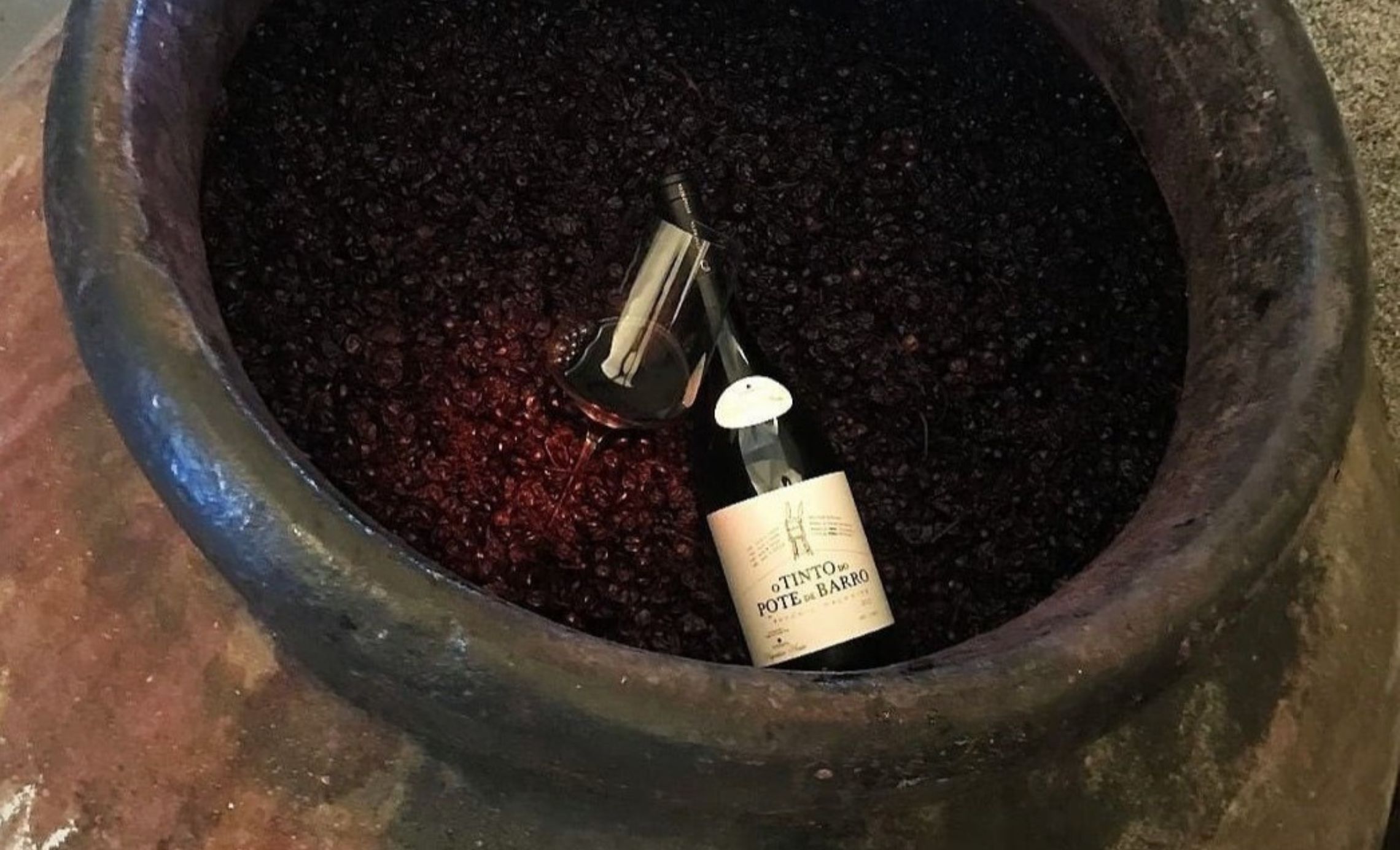
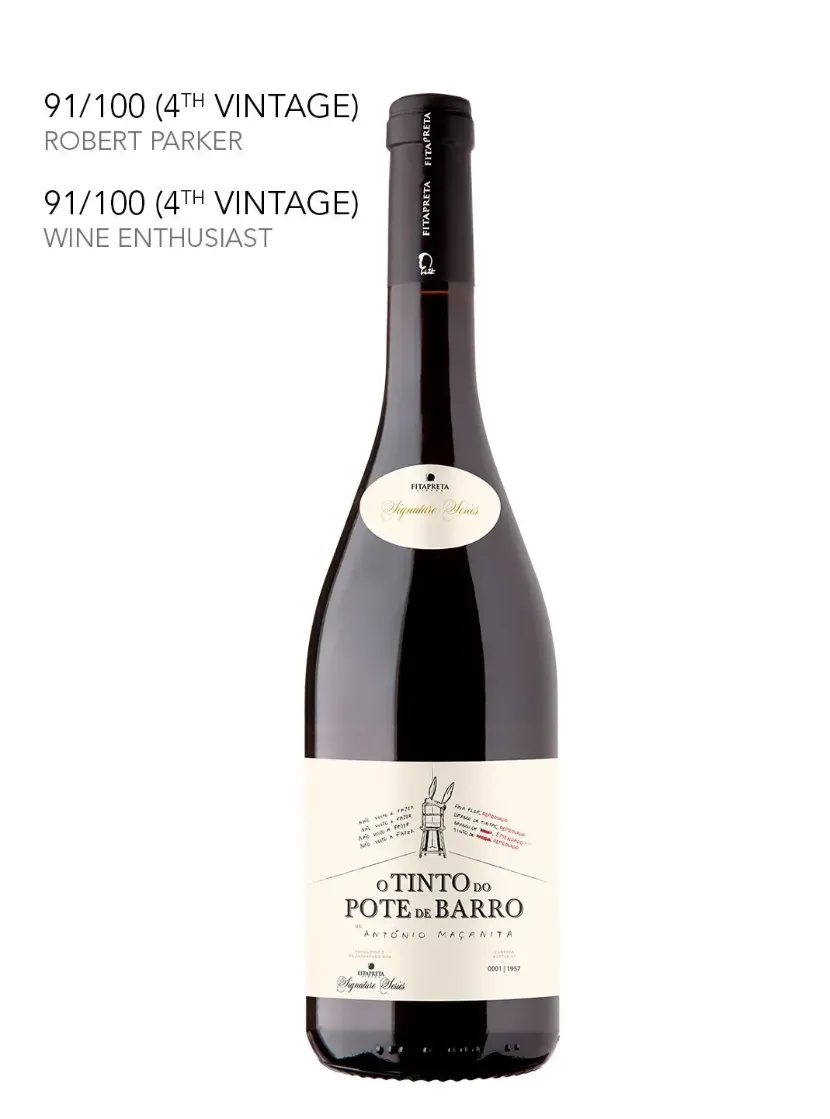
It couldn't be called "Talha" wine because the committee wouldn't let it, and it couldn't even be "Alentejo" because the committee didn't like it. So our punishment rehearsal in the corner of the room was reduced to a dignified and humble clay pot, just like you.
 />
Grape Varieties
Old vines planted in 1980, field blend of Trincadeira, Aragonês and Castelão.
Viticulture
The grapes are grown under a certified organic regime and are dry-farmed, without irrigation. Our vineyards are also all certified under the Alentejo sustainability program.
Vinification
Manual harvest at night on 350kg pallets. Selection on a sorting table. Gravity tank filling. Spontaneous alcoholic and malolactic fermentation in old Alentejo vats dating from 1906 to 1945. Post-fermentation maceration for 2 months. Ageing in clay amphorae for 90 days.
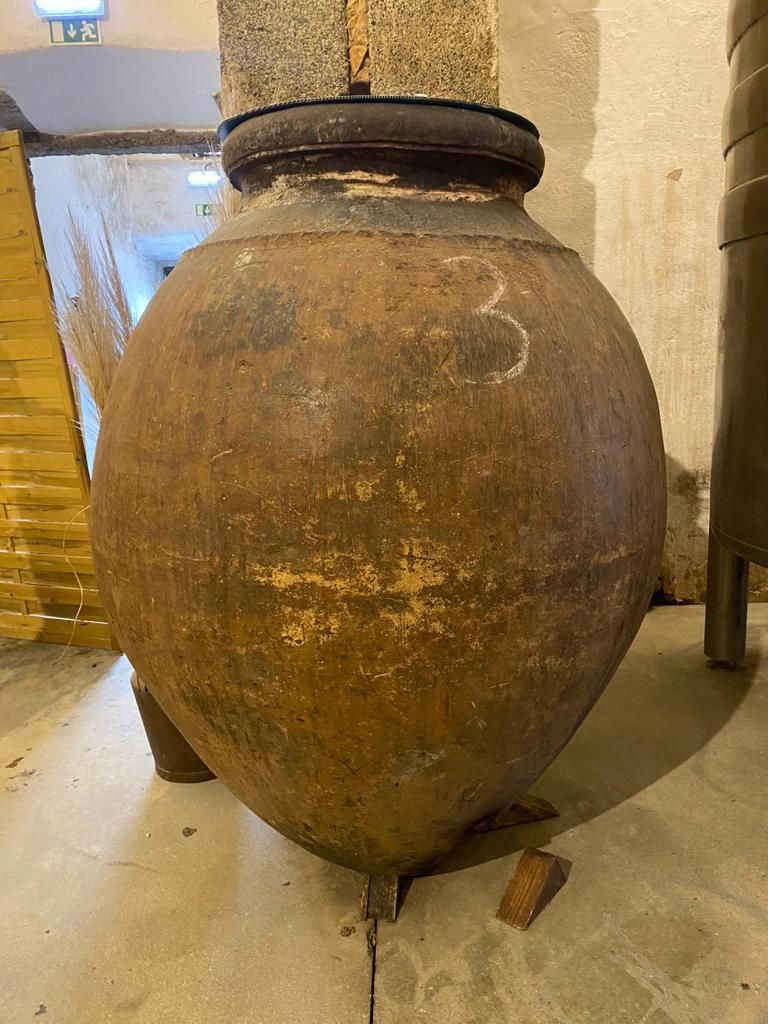
The Talha, a symbol of ancient Alentejo winemaking practices, is one of the last vestiges of Roman influence in the thousand-year history of Alentejo wines.
The Talha (or Amphora), usually made by hand, is a bulging vessel of fired clay that has played a growing role in the production of unique wines that capture the existence of an ancient Alentejo.
The winemaking process involves spontaneous fermentation in the Talha along with the skins, pips and sometimes some stalks. As the grape skins rise to the surface of the Talha, a wooden squeegee is used to return them to the bottom in order to increase the extraction of color and phenolic compounds.
The Talha should serve as a tool to enhance the sense of place and not mask it, in other words, making wine in a Talha should in a way celebrate the soils of the Alentejo, the old grape varieties, their positions and we should feel this in a glass of wine, together with the aroma of the Talha, a bit like cooking in a wood oven, but it shouldn't overpower the basic ingredient.
Related articles