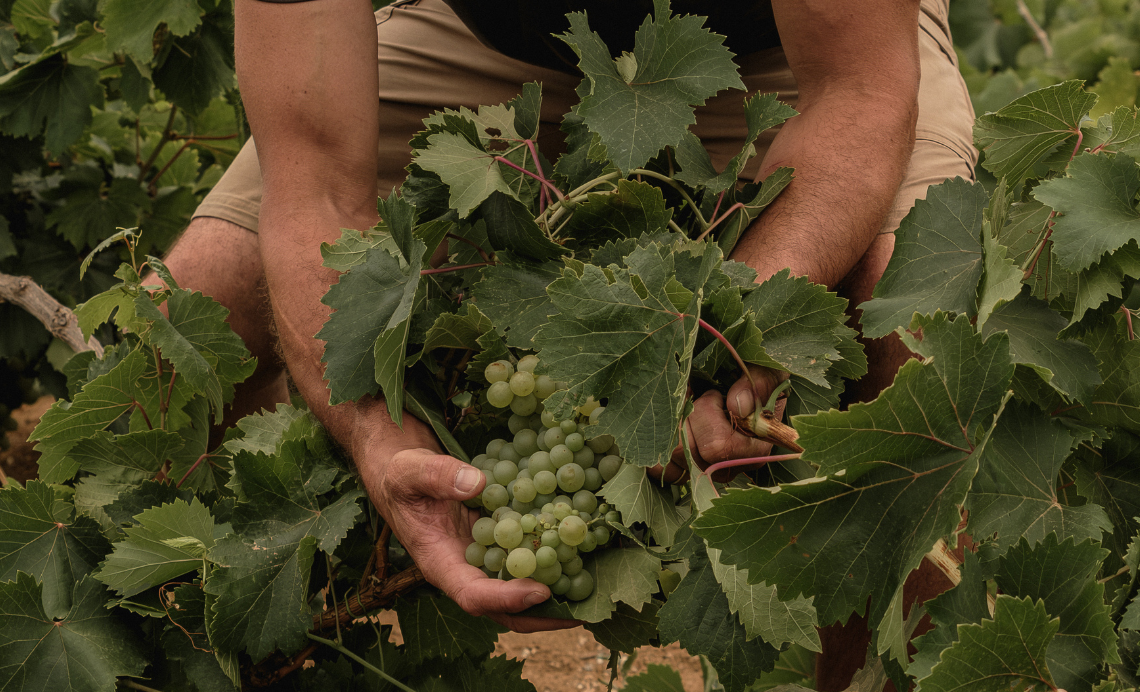

After the first gentle pressing, the grapes still have 10 to 15% juice. We let these grapes macerate for 7 days and then pressed them again and extracted more, more concentrated juice. This juice was spontaneously fermented.
 />
The result is disconcerting, unruly, disruptive, disturbing? in a very delicious way. It's not a movie, it's a wine. It's our Clockwork Orange, because life sometimes applies an agonizing pressure that we just try to bear. Here, we've transferred the mechanical pressure to the skins, which is a very healthy way of coping.
Grape varieties
Arinto, Roupeiro, Verdelho, Antão Vaz, Alicante Branco, Trincadeira-das-Pratas, Fernão Pires.
Viticulture
Our vineyards are in certified organic production and also certified under the Alentejo sustainability program.
Vinification
After the first pressing, the grapes are macerated for about a week, with the little juice that remains (10% to 15%), then pressed again, the released juice is cold decanted with spontaneous fermentation, no sulphur is added until the end of fermentation. There is then a complete malolactic fermentation. Aged in stainless steel.
Orange wine is white wine that takes on an orange hue as a result of contact (maceration) between the grape juice and the grape skins over a long period of time. In reality, the production of orange wine follows a vinification methodology similar to that of red wines, where the grape juice ferments with the grape skins and pips.
The contact between the juice and the skins and pips creates a wine with a lot of texture resulting from the tannins extracted from the skins during maceration.
Orange wines from warmer regions have more volume and softer tannins. On the other hand, in cooler regions Orange wines are generally fresher and have a more marked tannin.

Related articles